Everest RegionStrenuous
Everest Three Passes Trek with Island Peak Climbing - Experience the Everest Region Beyond the Ordinary
6,189 mLevel 5
PriceOn request
View trip
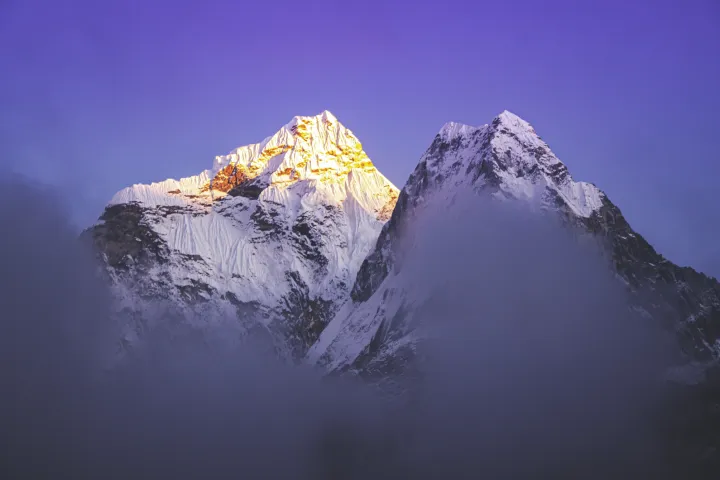
Langsisa Ri, also spelled Langshisha Ri, is a notable mountain in Nepal's Langtang region. It rises to 6,412 m and lies in the Jugal Himal range, near the upper Langtang Valley and the Tibetan border.
Unlike busier climbing peaks, Langsisa Ri offers a quieter, more remote mountain experience. The expedition starts with a drive from Kathmandu to Syabrubesi and follows the Langtang Valley through forests, traditional villages, alpine terrain and high mountain landscapes.
The route gradually leads to Kyanjin Gompa, one of the most important villages in the upper Langtang Valley. From there, it continues to Langsisa Kharka and Base Camp, where the trek becomes more technical.
Reaching the summit is challenging. Climbers should be prepared for technical mountain travel, glacier travel and snow- and ice-covered sections above 6,000 m.
Langsisa Ri suits experienced trekkers who want to develop their mountaineering skills. It is a less-crowded Himalayan summit that requires proper preparation, acclimatization and professional guiding support.
Langsisa Ri lies in the upper Langtang Valley, where the landscape shifts from forested hillsides to open alpine terrain, glacial valleys and snow-covered mountains. It suits climbers looking to combine a traditional Himalayan trek with a technical summit attempt, and its remoteness sets it apart from the crowded climbing routes of the Everest region.
The trail follows the Langtang Khola to Kyanjin Gompa. Beyond Kyanjin, the route becomes increasingly isolated, with limited facilities and more challenging walking. Langsisa Kharka is an important stop before heading to Base Camp.
The climbing route includes glacier travel and snow and ice slopes. Depending on the season and conditions, fixed ropes and other technical equipment may be essential.
Langsisa Ri is not simply about reaching an altitude: climbers need to manage their energy, acclimatize properly and understand the technical demands of high-altitude mountaineering.
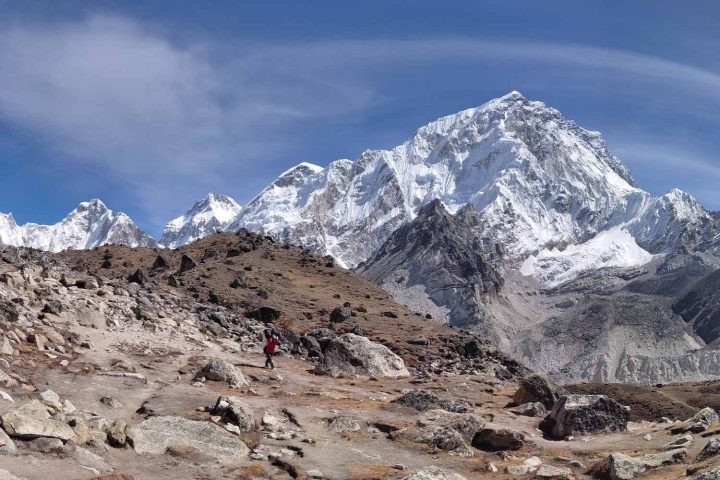
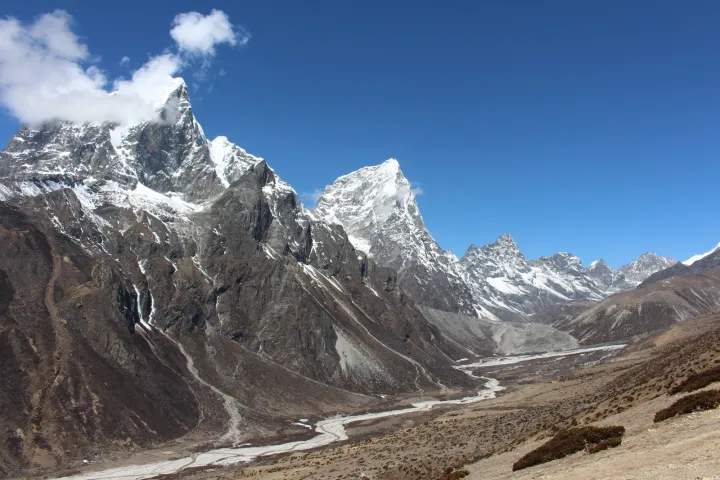
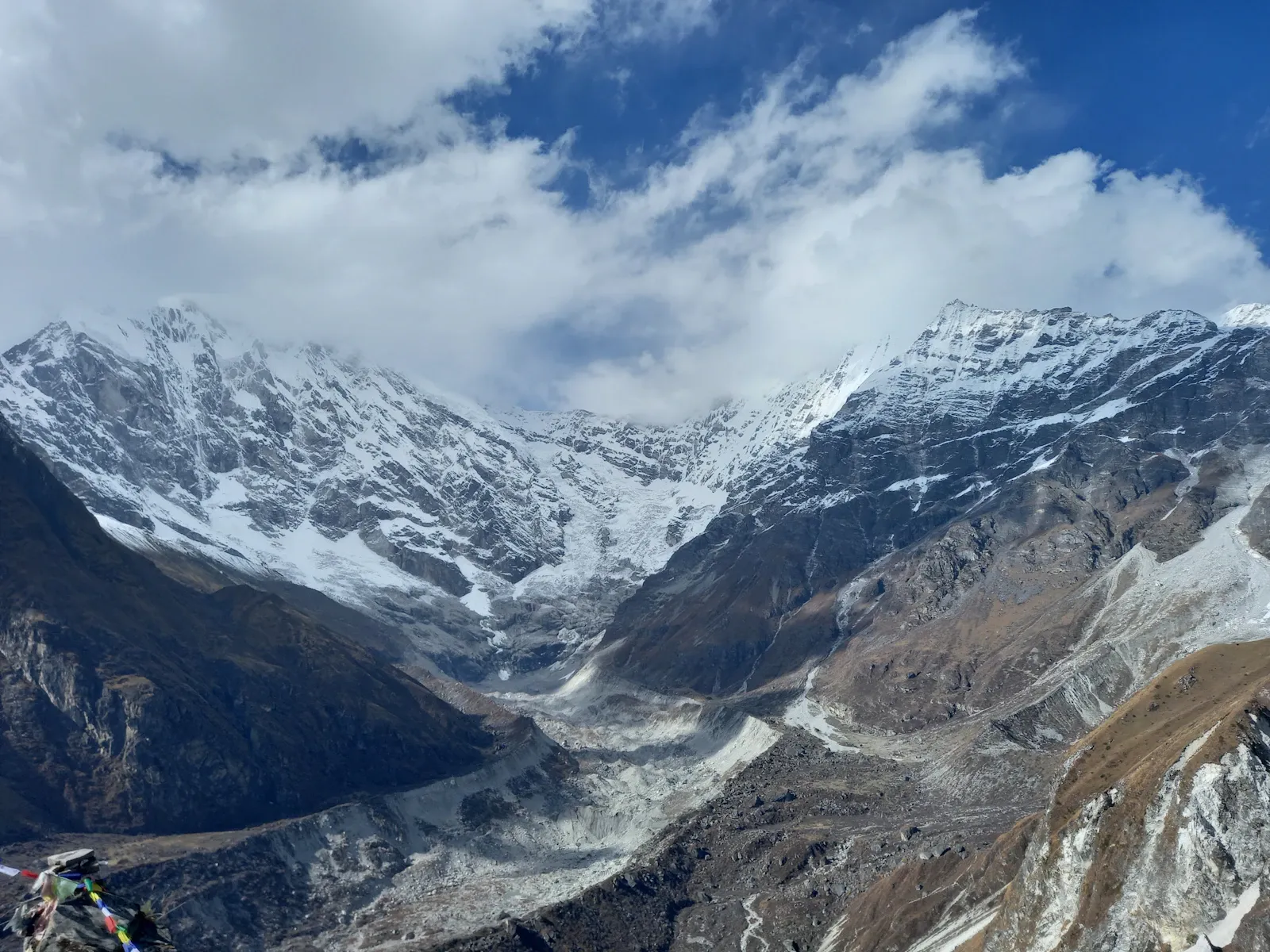
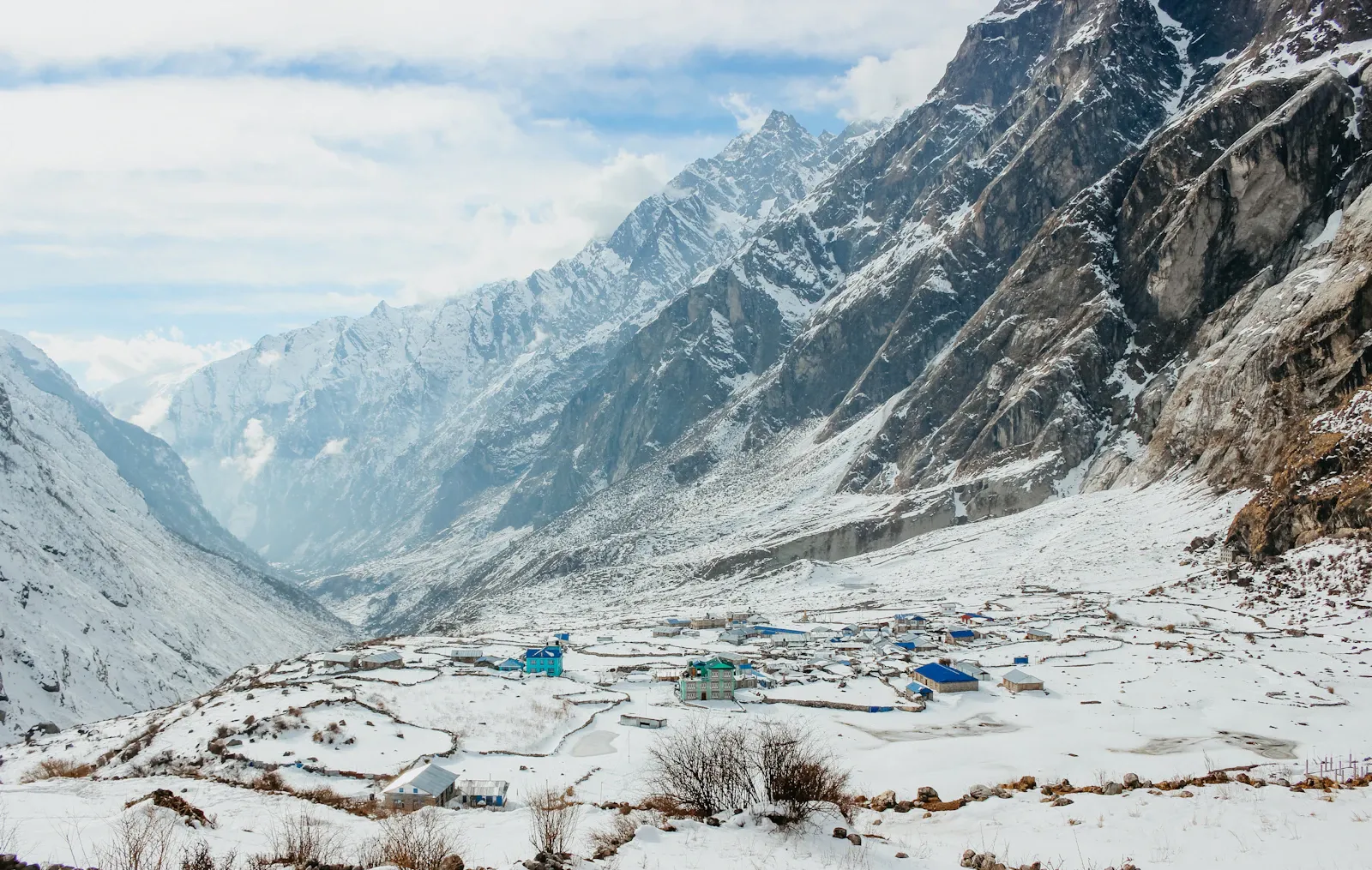
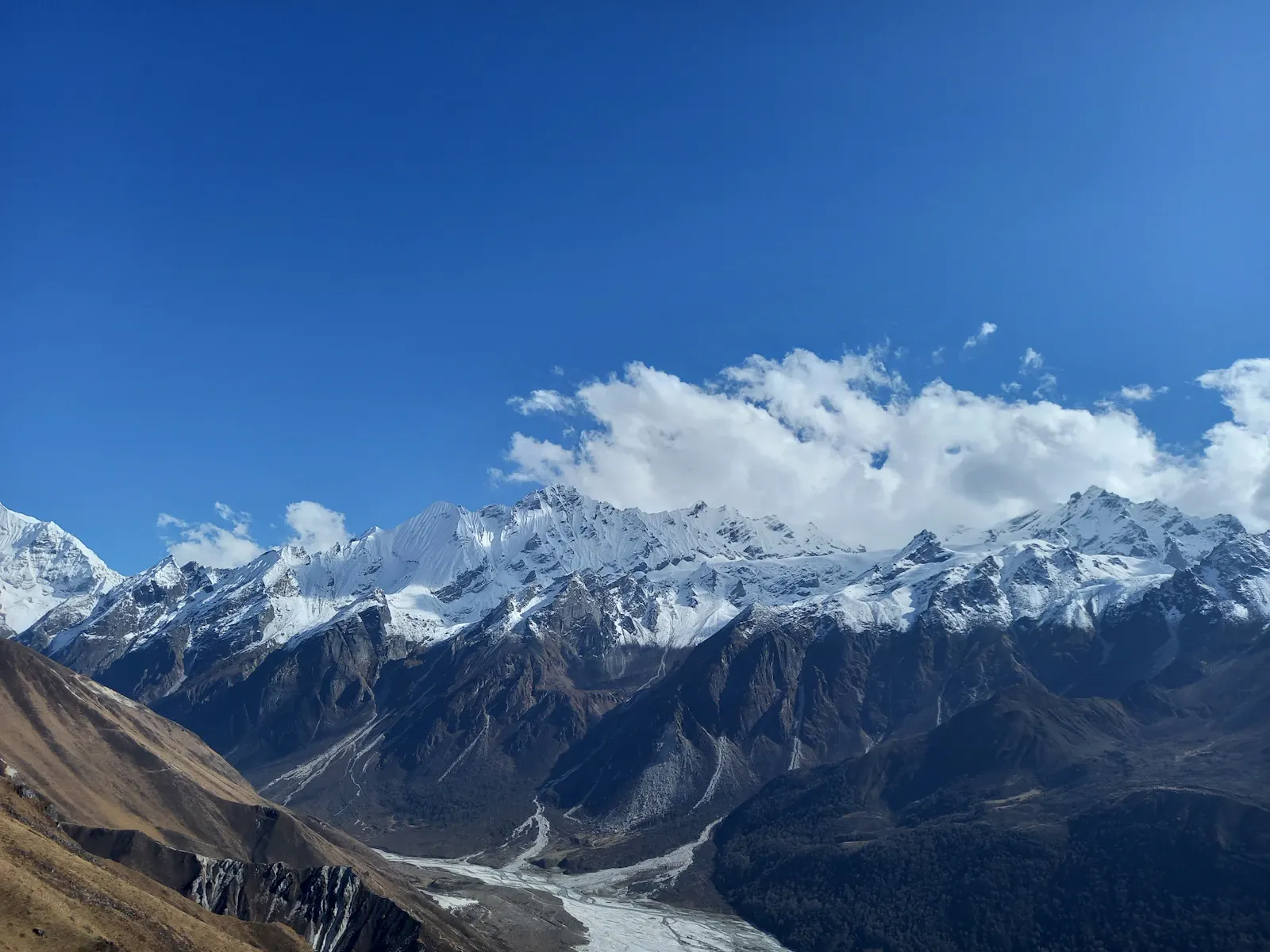
Langsisa Ri (6,412 m) is in the northern part of Rasuwa District, Bagmati Province, within Langtang National Park. It belongs to the Jugal Himal range and sits toward the head of the Langtang Valley, surrounded by glaciers, rocky ridges, alpine meadows and impressive Himalayan peaks.
The journey passes through several distinct zones:
This gradual change in landscape is an important part of the expedition, letting you experience the Langtang region while preparing for the challenges of high-altitude climbing.
Hover or tap a day for detailsScroll sideways to see every day
Altitudes are the highest point reached that day. Walking times are typical and exclude breaks; your guide adjusts the pace to the group.
When you arrive at Tribhuvan International Airport, our expedition representative welcomes you and transfers you to your hotel in Kathmandu (1,350 m).
After checking in, relax and recover from your journey. Depending on your arrival time, you can explore the nearby streets or enjoy a peaceful evening before the expedition begins.
Today is dedicated to preparing for the expedition. You meet your trekking and climbing guides for a briefing on the route, climbing arrangements, altitude challenges and safety procedures.
Your personal and technical climbing equipment is checked to make sure everything is suitable for the journey, and any missing or unsuitable gear can be arranged before departure.
After breakfast, you drive from Kathmandu to Syabrubesi (1,460 m), the main gateway to the Langtang Valley. The road winds through the hills, past rivers, terraced fields, green hillsides and traditional settlements.
As you enter Rasuwa District, the landscape becomes increasingly mountainous. In Syabrubesi, you check into a local teahouse or lodge and prepare for the trek ahead.
The trek begins today as you follow the Langtang Khola up a forested valley.
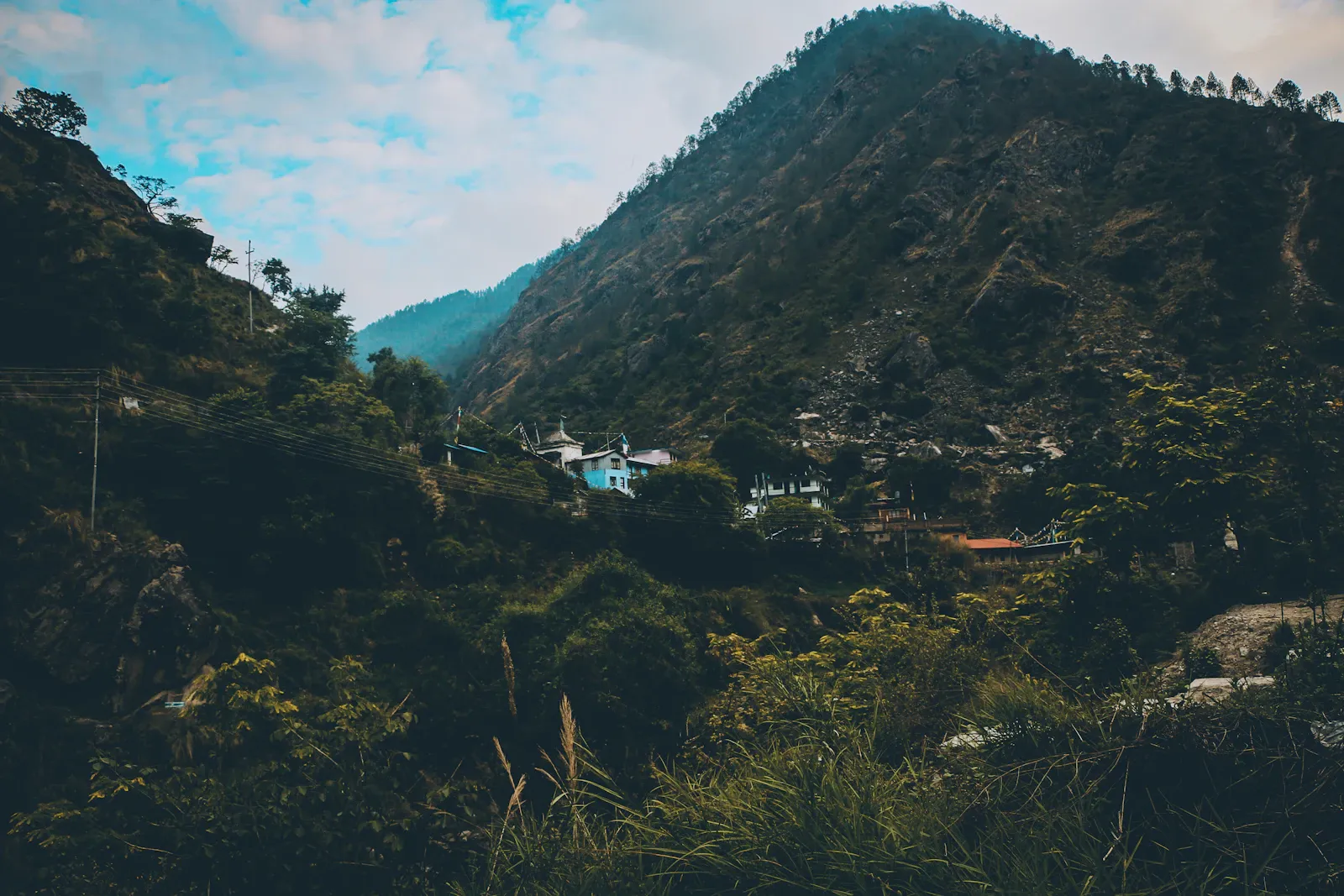
The trail crosses suspension bridges and passes through oak, bamboo, maple and rhododendron forest, with small settlements and grazing areas along the way. After several gradual climbs and descents, you reach Lama Hotel (2,470 m), a popular overnight stop for trekkers heading to the upper Langtang Valley.
After breakfast, you continue alongside the Langtang Khola as the trail climbs gradually through a changing mountain landscape. As you gain height, the dense forest thins, revealing open slopes and clearer views of the surrounding Himalayan peaks.
You eventually reach Langtang Village (3,430 m), a traditional Tamang settlement rebuilt after the 2015 earthquake. The village offers a chance to experience local culture, mountain life and the resilience of the Tamang community.
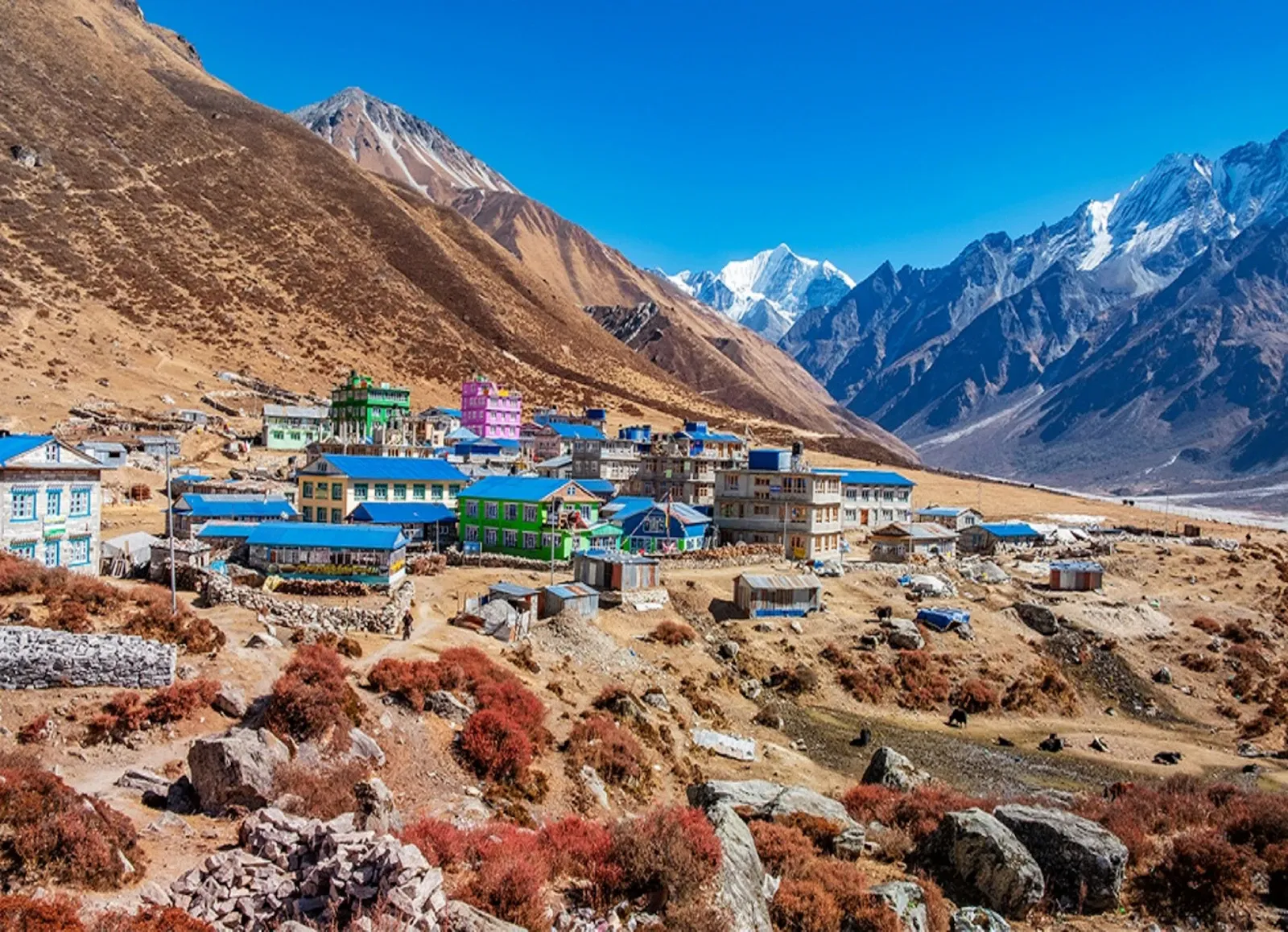
Today's trek takes you further up the Langtang Valley to Kyanjin Gompa (3,870 m). The trail passes open mountain landscapes, yak pastures, stone-walled fields and small settlements, and the surrounding peaks become more visible as you climb.
At Kyanjin Gompa, you settle into a local lodge and enjoy the peaceful surroundings. Kyanjin is also an important acclimatization stop before continuing toward the Langsisa Ri climbing area.
Today is set aside for acclimatization before heading higher.
Depending on your fitness and your guide's advice, you can take a gradual hike to Kyanjin Ri or Tserko Ri. Both viewpoints offer beautiful views of Langtang Lirung and the surrounding peaks, and the hike helps your body adjust to the altitude while keeping you active at a comfortable pace.
After returning to Kyanjin Gompa, rest, stay hydrated and prepare for the journey toward Langsisa Ri Base Camp.
Leaving Kyanjin Gompa, you follow the upper valley toward Langsisa Kharka (4,160 m).
The trail enters a more open alpine landscape, crossing rocky terrain and grazing areas with views of the surrounding glaciers and snow-covered peaks. At Langsisa Kharka, you settle into a tented camp and prepare for the next stage of the expedition.
Altitude: approx. 4,500–4,800 m
Today you continue to Langsisa Ri Base Camp. The trail becomes increasingly rugged as you cross rocky ground, moraine and glacial terrain.
Facilities are limited in this remote section, so the expedition team manages meals, shelter and camp arrangements. At Base Camp, the team sets up camp and reviews the climbing plan for the summit attempt.
Today is important for both physical recovery and technical preparation before moving up to High Camp.
Your climbing guide checks the essential equipment for the summit attempt, including crampons, ice axes, harnesses, helmets and ropes. Depending on conditions, you may practise glacier travel, rope techniques and safe movement on snow and ice.
The rest of the day is for rest, hydration and acclimatization.
Altitude: approx. 5,300–5,500 m
After the final equipment checks, you start climbing toward High Camp. The route crosses rocky sections, moraine and glacial terrain, and the climbing team assesses the snow and ice conditions along the way.
As you gain altitude, the air becomes thinner and the climb more demanding, so keep a steady pace and follow your guide's instructions. At High Camp, organize your climbing equipment, prepare for the summit attempt and rest as much as possible.
Today is the main objective of the expedition. The summit attempt usually begins early in the morning, when snow and weather conditions are more suitable for climbing.
With your climbing guide, you cross glacier terrain and snow-covered slopes, tackling steep sections and exposed ridges along the way. Depending on conditions, you may need fixed ropes and technical equipment.
From the summit, you can enjoy remarkable views of the surrounding Himalayan peaks before descending carefully along the same route to Base Camp.
The summit attempt depends on the weather, snow conditions and the team's fitness. Safety remains the priority, and reaching the summit cannot be guaranteed.
This day is kept in reserve for the summit attempt in case the weather or climbing conditions are unfavorable.
If the first attempt was postponed because of strong winds, poor visibility or unstable snow, the climbing leader may use this day for another attempt if conditions are safe. If you have already reached the summit, the day can be used for recovery, rest and organizing equipment before the descent.
After the climb, you descend to Kyanjin Gompa (3,870 m) on rocky trails through alpine landscapes. As you lose altitude, the air becomes easier to breathe and the walking gradually gets easier.
At Kyanjin Gompa, you settle into a local teahouse to rest and recover after the challenging days at higher elevations.
Today you continue descending through Langtang Village and the forested trails of the valley, following the Langtang Khola past familiar settlements, suspension bridges and woodland.
After several hours of walking, you arrive at Lama Hotel (2,470 m) to rest and spend the evening at a local teahouse.
After breakfast, you continue down to Syabrubesi (1,460 m) on familiar forest trails, riverside paths and suspension bridges. As you reach the lower valley, the vegetation becomes denser and the surroundings greener.
In Syabrubesi, you can relax, enjoy a comfortable evening and celebrate completing your Langsisa Ri expedition.
After breakfast, you drive back to Kathmandu, retracing the mountain roads through Rasuwa and Nuwakot and enjoying the countryside, rivers and green hills along the way.
On arrival in Kathmandu, you are transferred to your hotel and have the rest of the day to relax after the expedition.
Your Langsisa Ri Peak Climbing expedition ends today. Depending on your flight schedule, our representative transfers you to Tribhuvan International Airport for your departure.
You leave Nepal with lasting memories of the Langtang Valley, its welcoming communities and the unforgettable experience of climbing in the Himalaya.
Every itinerary on this page can be changed. Tell us what you would like and a trip planner will send back a tailored day-by-day plan and price, usually within a few hours.
Please contact us for current rates for private or group departures. The total cost depends on team size, the services chosen and current official permit fees.
Pick any start date in the booking box or send us your plans and we'll confirm availability within a few hours.
Langsisa Ri is a demanding mountaineering objective that requires good physical fitness, proper acclimatization and basic technical climbing skills. Although the approach follows the established Langtang Valley trekking trail, the climb involves glacier travel, steep snow and ice slopes and exposed high-altitude terrain. The main challenges are:
Langsisa Ri suits physically fit climbers with previous high-altitude trekking and mountaineering experience. It is not recommended for beginners.
Langsisa Ri requires good physical fitness, high-altitude trekking experience and basic mountaineering skills. Previous climbs of Island Peak, Lobuche East or Mera Peak help, especially for familiarity with glacier travel. You should be comfortable with:
Regular cardiovascular training, strength exercises, stair climbing and long-distance hiking help build the necessary endurance. A professional climbing guide assesses each climber's technical ability and readiness before the summit attempt.
The best seasons for climbing Langsisa Ri are spring (April–May) and autumn (September–November), which generally offer better weather, visibility and climbing conditions.
Spring (April–May): relatively warm temperatures, longer daylight hours and generally suitable climbing conditions. The lower Langtang Valley is colorful with blooming rhododendrons and fresh vegetation.
Autumn (September–November): another favorable season, especially October and November. The skies are generally clear after the monsoon, with excellent mountain views, although it gets colder as winter approaches.
Monsoon (June–August): heavy rain, cloud and unstable weather make climbing difficult, and landslides can disrupt access to the Langtang Valley.
Winter (December–February): freezing temperatures, heavy snowfall and challenging conditions on the glaciers and upper slopes. Generally unsuitable for standard commercial expeditions.
The final climbing schedule always takes into account current weather forecasts, snow conditions and the expedition leader's advice.
You need the following permits before starting the expedition:
We arrange the permits and let you know which documents are required before departure.
Accommodation varies with altitude and location:
Meals: during the trek, meals generally include dal bhat, rice, noodles, soups, potatoes and vegetables. At the higher camps, the expedition kitchen team prepares nutritious meals to give you enough energy for climbing and recovery.
Regular meals and plenty of fluids are important throughout the expedition, especially at higher elevations.
The Langtang Valley is home to Tamang communities, known for their Tibetan-influenced Buddhist traditions, language and Himalayan way of life.
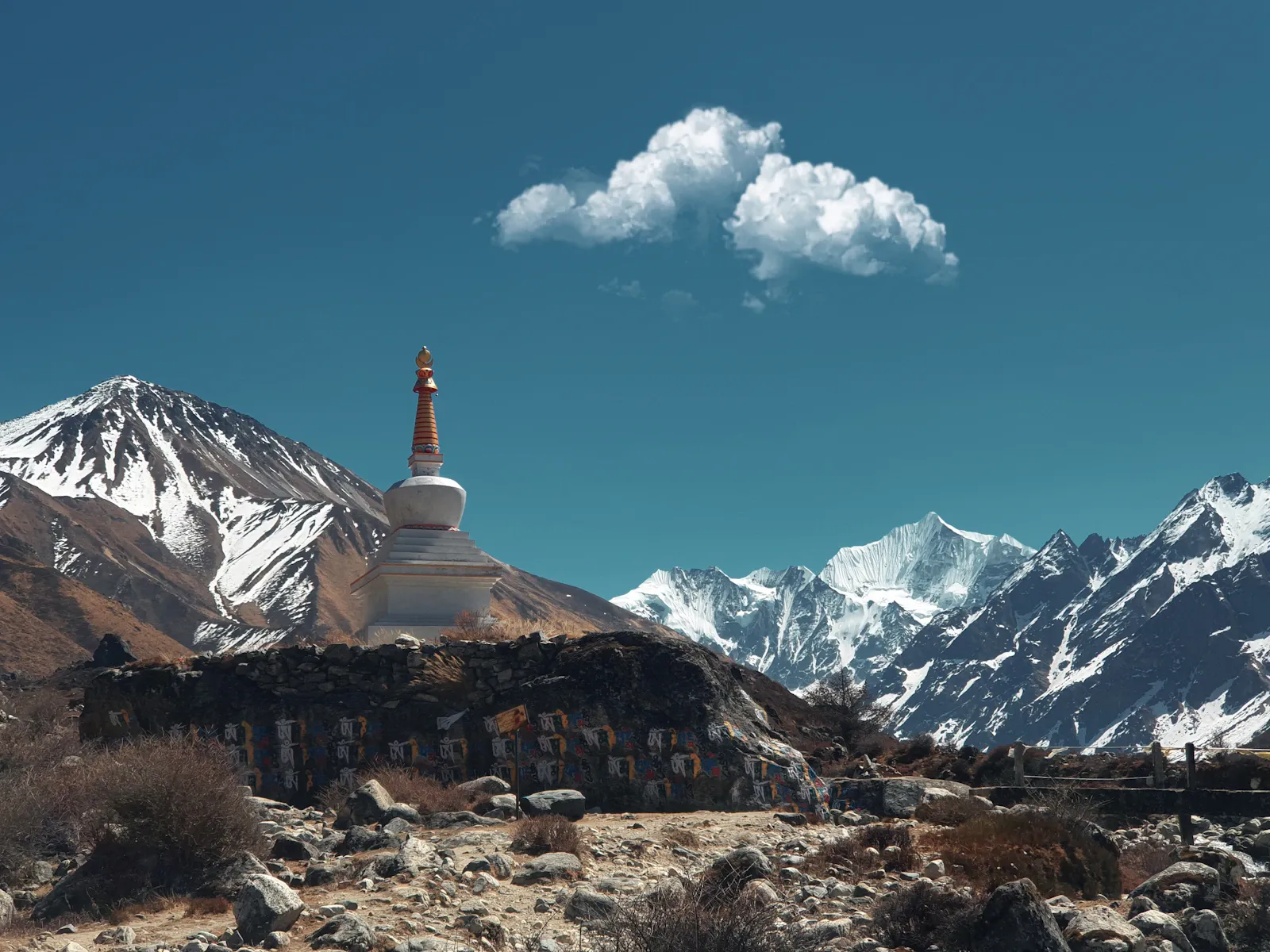
Through Syabrubesi, Lama Hotel and Langtang Village, you see traditional stone houses, prayer flags, mani walls and Buddhist monasteries. Kyanjin Gompa is an important cultural and religious centre of the valley. Yak herding, livestock farming, traditional food and tourism are important parts of local livelihoods.
You can support local communities by using local services, respecting religious customs, asking permission before taking photos and protecting the region's cultural and natural heritage.
Altitude sickness is a major concern on Langsisa Ri. As you climb higher, oxygen becomes more limited and the climb more demanding. Common symptoms of AMS are:
The acclimatization stop at Kyanjin Gompa and the gradual climb to the higher camps help the body adapt to the increasing altitude, but acclimatization doesn't remove the risk of altitude sickness. Follow these precautions:
Safety is the top priority on Langsisa Ri because of its technical terrain and remote location. Your climbing guide assesses the weather forecast, snow conditions, glaciers and climbers' fitness before going higher. Safety measures include:
Travel and mountaineering insurance are essential for Langsisa Ri, as the summit is above 6,000 m. Before departure, make sure your policy covers:
Check the package inclusions and exclusions before departure.
The cost of Langsisa Ri Peak Climbing depends on the duration, group size, climbing staff, equipment, accommodation and transport. Because Base Camp is isolated and technical mountaineering support is required, it costs more than a standard trek. The main cost factors are:
Contact us for current rates for private or group bookings.
Paced perfectly for the altitude
Our guide checked our oxygen levels every evening and never once rushed us. Standing at base camp after nine days of walking was emotional, and the team made it feel effortless to organise.
Thorong La at sunrise
We left High Camp at 4 am and topped out on the pass as the sun hit the snow. The teahouses were well chosen, food was hot, and our porter Binod became a friend.
Small group, big views
Mardi Himal was the perfect short trek for us. Rhododendrons in full bloom, Machhapuchhre right in front of us at high camp, and a guide who knew every village we passed.
Langtang exceeded every expectation
Close to Kathmandu but it feels remote. Kyanjin Gompa and the climb to Tserko Ri were highlights. Communication before the trip was quick and honest about what to expect.
Keep exploring
More trips in the Langtang Region and similar adventures.
Everest RegionStrenuous
6,189 mLevel 5
PriceOn request
View tripEverest RegionVery demanding
6,189 mLevel 5
PriceOn request
View tripEverest RegionModerate to Challenging
6,119 mLevel 3
From US$2,700
View tripEverest RegionVery challenging and technical
6,423 mLevel 5
PriceOn request
View tripEverest RegionVery demanding and highly technical
6,367 mLevel 5
PriceOn request
View tripEverest RegionTechnical alpine climb, AD+
6,340 mLevel 5
PriceOn request
View tripAnnapurna RegionVery challenging and technical
6,501 mLevel 5
PriceOn request
View tripAnnapurna RegionDemanding and technical
6,419 mLevel 5
PriceOn request
View tripPlan with a local expert
Send us your preferred dates. We'll confirm availability, flights and lodges, and answer any question before you pay a deposit.